


- Key People:
- Charles Elton
- Pierre Dansereau
- Related Topics:
- population
- ecological disturbance
- ecological resilience
- decomposer
- aquatic ecosystem
- On the Web:
- Biology LibreTexts - Ecosystems (Sep. 18, 2026)


ecosystem
-
What is an ecosystem?
An ecosystem is a complex unit where a community of organisms interacts with its physical environment. This includes all living organisms (biota) and the nonliving factors from which they obtain energy and nutrients. Within an ecosystem, organisms are organized into trophic levels, forming a food chain. Primary producers, like plants, harness solar energy through photosynthesis to create organic substances. Consumers, known as heterotrophs, then obtain energy by eating other organisms, directly or indirectly relying on these producers. Energy flows through the ecosystem, with a significant portion lost as heat at each trophic level. Ecosystems can be found in various forms, from forests and grasslands to aquatic environments like lakes and oceans.
5 Britannica SourcesThis answer is created from Britannica articles using AI. AI can make mistakes, so verify using Britannica articles. -
What are the main parts of an ecosystem?
An ecosystem is composed of living organisms and their physical environment, interconnected by energy flow and nutrient cycling. The main parts include:
-
Biotic Components: These are the living organisms. They are categorized into trophic levels:
- Producers: Primarily green plants that create their own food through photosynthesis.
- Consumers: Organisms that cannot make their own food and obtain energy by eating other organisms. This includes herbivores (primary consumers), carnivores (secondary consumers), and omnivores.
- Decomposers: Organisms like bacteria and fungi that break down dead organic matter, returning nutrients to the environment.
-
Abiotic Components: These are the nonliving elements, such as minerals, climate, soil, water, and sunlight, which provide energy and nutrients for the organisms.
4 Britannica SourcesThis answer is created from Britannica articles using AI. AI can make mistakes, so verify using Britannica articles. -
-
How do plants and animals depend on each other in an ecosystem?
In an ecosystem, plants and animals are interdependent. Plants, as primary producers, convert sunlight into energy through photosynthesis, forming the base of the food chain. Animals, or consumers, rely on plants for food and the energy stored in them. A crucial byproduct of photosynthesis is oxygen, which most animals need to breathe. This relationship highlights a fundamental interdependence where plants provide the energy and oxygen necessary for animal life, while animals contribute to nutrient cycling through decomposition.
7 Britannica SourcesThis answer is created from Britannica articles using AI. AI can make mistakes, so verify using Britannica articles. -
What role do nonliving things, like water and sunlight, play in an ecosystem?
Nonliving things, known as abiotic factors, are essential components of an ecosystem. These include minerals, climate, soil, water, and sunlight. Sunlight is the fundamental energy source for most ecosystems, powering photosynthesis in plants. This process converts carbon dioxide and water into carbohydrates, forming the base of food webs. Water is crucial for all life and plays a role in nutrient cycling through the water cycle. These nonliving elements provide the necessary resources and energy flow that sustain all living organisms within an ecosystem.
6 Britannica SourcesThis answer is created from Britannica articles using AI. AI can make mistakes, so verify using Britannica articles. -
How do ecosystems change over time?
Ecosystems are dynamic and constantly change in response to environmental factors like temperature, moisture, and nutrient availability. This process of change is known as ecological succession.
There are two main types of succession:
* Primary succession occurs when life colonizes a barren habitat, such as a new volcanic island.
* Secondary succession begins after a disturbance, like a wildfire or flood, has altered an existing ecosystem.Natural disturbances such as floods, fires, and even animal activity can reset or override succession, leading to an ever-changing mix of species rather than a static climax community. Ecosystems possess ecological resilience, which is their ability to maintain normal functions after a disturbance and recover over time.
6 Britannica SourcesThis answer is created from Britannica articles using AI. AI can make mistakes, so verify using Britannica articles. -
What threats can harm ecosystems and how can people help protect them?
Ecosystems face threats from habitat loss, degradation, and fragmentation, often caused by human development, pollution, and invasive species. Climate change also impacts ecosystems through altered weather patterns.
People can help protect ecosystems by reducing their environmental footprint. This includes responsible land use, minimizing pollution, and preventing the spread of invasive species. Engaging in activities like "plogging" (picking up litter while jogging) or other forms of litter cleanup also contributes to environmental health. Protecting biodiversity is crucial for ecosystem stability and resilience.
6 Britannica SourcesThis answer is created from Britannica articles using AI. AI can make mistakes, so verify using Britannica articles.
ecosystem, the complex of living organisms, their physical environment, and all their interrelationships in a particular unit of space.
A brief treatment of ecosystems follows. For full treatment, see biosphere.
An ecosystem can be categorized into its abiotic constituents, including minerals, climate, soil, water, sunlight, and all other nonliving elements, and its biotic constituents, consisting of all its living members. Linking these constituents together are two major forces: the flow of energy through the ecosystem and the cycling of nutrients within the ecosystem. Ecosystems vary in size: some are small enough to be contained within single water droplets while others are large enough to encompass entire landscapes and regions (see biome).
Energy flow

The fundamental source of energy in almost all ecosystems is radiant energy from the Sun. The energy of sunlight is used by the ecosystem’s autotrophic, or self-sustaining, organisms (that is, those that can make their own food). Consisting largely of green vegetation, these organisms are capable of photosynthesis—i.e., they can use the energy of sunlight to convert carbon dioxide and water into simple, energy-rich carbohydrates. The autotrophs use the energy stored within the simple carbohydrates to produce the more complex organic compounds, such as proteins, lipids, and starches, that maintain the organisms’ life processes. The autotrophic segment of the ecosystem is commonly referred to as the producer level.

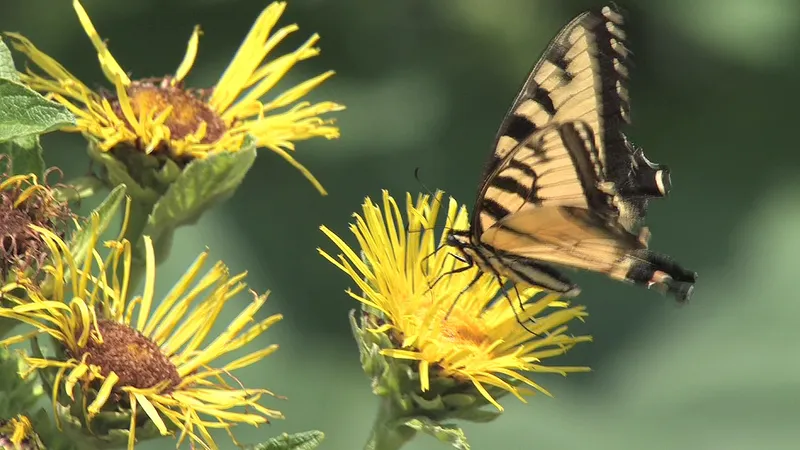
Organic matter generated by autotrophs directly or indirectly sustains heterotrophic organisms. Heterotrophs are the consumers of the ecosystem; they cannot make their own food. They use, rearrange, and ultimately decompose the complex organic materials built up by the autotrophs. All animals and fungi are heterotrophs, as are most bacteria and many other microorganisms.