


strawberry
News •
-
What is a strawberry?
The strawberry, from the genus Fragaria, is a flowering plant in the rose family (Rosaceae) that produces an edible fruit. Strawberries are native to the temperate regions of the Northern Hemisphere, though cultivated varieties are grown worldwide.
Strawberries are low-growing herbaceous plants with compound leaves, typically with three leaflets, sawtooth-edged, and usually hairy. The flowers are generally white, rarely reddish, and grow in small clusters on slender stalks. Botanically, the strawberry fruit is an "accessory fruit" rather than a true berry. The flesh consists of the greatly enlarged flower receptacle embedded with many true fruits, or achenes, known as seeds.
The cultivated large-fruited strawberry (Fragaria ×ananassa) originated in Europe in the 18th century. The fruits are rich in vitamin C and commonly eaten fresh as a dessert fruit, used as a pastry or pie filling, and preserved in many ways.
3 Britannica SourcesThis answer is created from Britannica articles using AI. AI can make mistakes, so verify using Britannica articles. -
How does a strawberry plant grow?
A strawberry plant's growth begins with its fibrous root system and a crown from which basal leaves emerge. These leaves are compound, typically featuring three leaflets with sawtooth edges and hairs. The plant's flowers, usually white but sometimes reddish, grow in small clusters on slender stalks. As the plant matures, the root system becomes woody, and the crown sends out runners that root upon touching the ground, expanding the plant vegetatively.
The cultivated strawberry ( Fragaria ×ananassa) originated in 18th-century Europe. These plants succeed in various soils but need moisture and are susceptible to drought. They are also vulnerable to nematodes and soil fungi. Runner plants are planted in early autumn for a crop the next year or in winter/spring with deblossoming to avoid weakening. Plants are typically kept for one to four years. The strawberry fruit is an accessory fruit, with the flesh being the enlarged flower receptacle embedded with achenes, which are the true fruits.
2 Britannica SourcesThis answer is created from Britannica articles using AI. AI can make mistakes, so verify using Britannica articles. -
What does the fruit of a strawberry look like?
The strawberry plant is a low-growing herbaceous plant that sprouts basal leaves from its crown. Its flowers are generally white but can be reddish.
The strawberry fruit is not a true berry. It is an accessory fruit with flesh consisting of a greatly enlarged flower receptacle. The many true fruits, or achenes, are popularly called seeds and are embedded in the flesh. One hybrid strain, the Mara des Bois strawberry, ranges in color from brick red to pinkish purple, and in size from a pea to a plum.
3 Britannica SourcesThis answer is created from Britannica articles using AI. AI can make mistakes, so verify using Britannica articles. -
How do strawberries reproduce and spread in nature?
Strawberries reproduce and spread through both sexual and asexual methods.
Sexual Reproduction
Strawberries create seeds through the typical sexual reproduction process of flowering plants. The strawberry fruit's flesh is actually part of the flower, with the seeds being the true fruits. Animals eat the fruit and disperse the seeds in their feces.
Asexual Reproduction
Strawberries also spread asexually through runners, which are specialized aerial stems that grow horizontally. These runners allow the plant to expand vegetatively as they touch the ground, root, and form new plantlets.
5 Britannica SourcesThis answer is created from Britannica articles using AI. AI can make mistakes, so verify using Britannica articles. -
What nutrients can be found in strawberries?
Strawberries contain anthocyanins, which are water-soluble pigments that can be orange-red, crimson, or blue. These pigments, also present in other fruits like cherries, cranberries, raspberries, blueberries, grapes, and black currants, may help protect against cardiovascular disease by inhibiting cholesterol synthesis.
The U.S. Department of Agriculture recommends consuming two to four servings of fruit daily. Fruits offer protection against various diseases, and increasing consumption of vitamin C and carotenoids, found in citrus fruits, can reduce the risk of heart disease. Blueberries, for example, are a good source of dietary fiber, vitamin C, vitamin K, manganese, and iron, along with antioxidants like anthocyanin.
2 Britannica SourcesThis answer is created from Britannica articles using AI. AI can make mistakes, so verify using Britannica articles. -
How are strawberries used in food and cooking around the world?
Strawberries, from the genus Fragaria, are native to the temperate regions of the Northern Hemisphere. They are now cultivated worldwide, with many countries developing varieties suited to their climate.
Strawberries are rich in vitamin C and are commonly eaten fresh as a dessert fruit. They can be used as a pastry or pie filling, and can be preserved to extend their shelf life. Strawberry shortcake is a traditional American dessert made with fresh strawberries, sponge cake, and whipped cream. Strawberries are also processed into frozen, canned, or preserved products, as well as juice.
2 Britannica SourcesThis answer is created from Britannica articles using AI. AI can make mistakes, so verify using Britannica articles.
strawberry, (genus Fragaria), genus of more than 20 species of flowering plants in the rose family (Rosaceae) and their edible fruit. Strawberries are native to the temperate regions of the Northern Hemisphere, and cultivated varieties are widely grown throughout the world. The fruits are rich in vitamin C and are commonly eaten fresh as a dessert fruit, are used as a pastry or pie filling, and may be preserved in many ways. Strawberry shortcake—made of fresh strawberries, sponge cake, and whipped cream—is a traditional American dessert.
Physical description

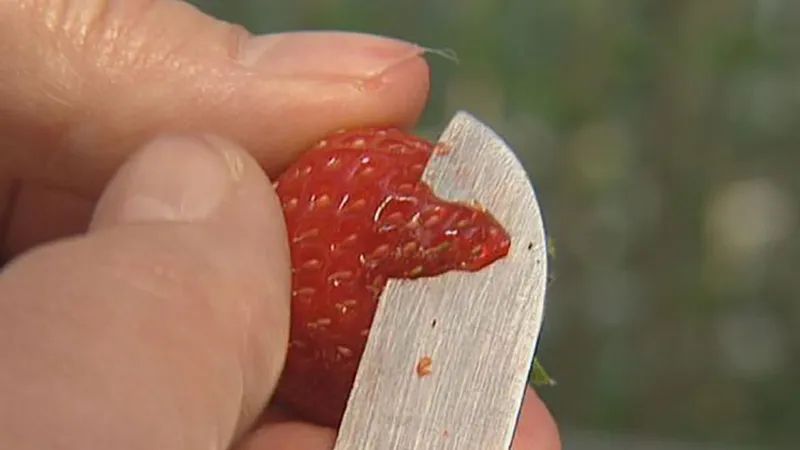
Strawberries are low-growing herbaceous plants with a fibrous root system and a crown from which arise basal leaves. The leaves are compound, typically with three leaflets, sawtooth-edged, and usually hairy. The flowers, generally white, rarely reddish, are borne in small clusters on slender stalks arising, like the surface-creeping stems, from the axils of the leaves. As a plant ages, the root system becomes woody, and the “mother” crown sends out runners (e.g., stolons) that touch ground and root, thus enlarging the plant vegetatively. Botanically, the strawberry fruit is considered an “accessory fruit” and is not a true berry. The flesh consists of the greatly enlarged flower receptacle and is embedded with the many true fruits, or achenes, which are popularly called seeds.
Cultivation

The cultivated large-fruited strawberry (Fragaria ×ananassa) originated in Europe in the 18th century. Most countries developed their own varieties during the 19th century, and those are often specially suitable for the climate, day length, altitude, or type of production required in a particular region. Strawberries are produced commercially both for immediate consumption and for processing as frozen, canned, or preserved berries or as juice. Given the perishable nature of the berries and the unlikelihood of mechanical picking, the fruit is generally grown near centres of consumption or processing and where sufficient labour is available. The berries are handpicked directly into small baskets and crated for marketing or put into trays for processing. Early crops can be produced under glass or plastic covering. Strawberries are very perishable and require cool dry storage.


The strawberry succeeds in a surprisingly wide range of soils and situations and, compared with other horticultural crops, has a low fertilizer requirement. It is, however, susceptible to drought and requires moisture-retaining soil or irrigation by furrow or sprinkler. Additionally, the plants are susceptible to nematodes and pathogenic soil fungi, and many growers sterilize the soil with chemicals such as methyl bromide prior to planting. Runner plants are planted in early autumn if a crop is required the next year. If planted in winter or spring, the plants are deblossomed to avoid a weakening crop the first year. Plants are usually retained for one to four years. Runners may be removed from the spaced plants, or a certain number may be allowed to form a matted row alongside the original parent plants. In areas with severe winters, plants are put out in the spring and protected during the following winters by covering the rows with straw or other mulches.
Major species
In addition to the dominant commercial variety (Fragaria ×ananassa), the musk, or hautbois, strawberry (F. moschata) is also cultivated in some areas for its unique musky aroma and flavour.
Wild strawberries grow in a variety of habitats, ranging from open woodlands and meadows to sand dunes and beaches. The woodland, or alpine, strawberry (F. vesca) can be found throughout much of the Northern Hemisphere and bears small intensely flavourful fruits. Common North American species include the Virginia wild strawberry (F. virginiana) and the beach, or coastal, strawberry (F. chiloensis).