Archaeologists excavating at an ancient Viking settlement in southeast Denmark thought they were dealing with a typical country town from the Middle Ages. Then a single toilet changed everything.
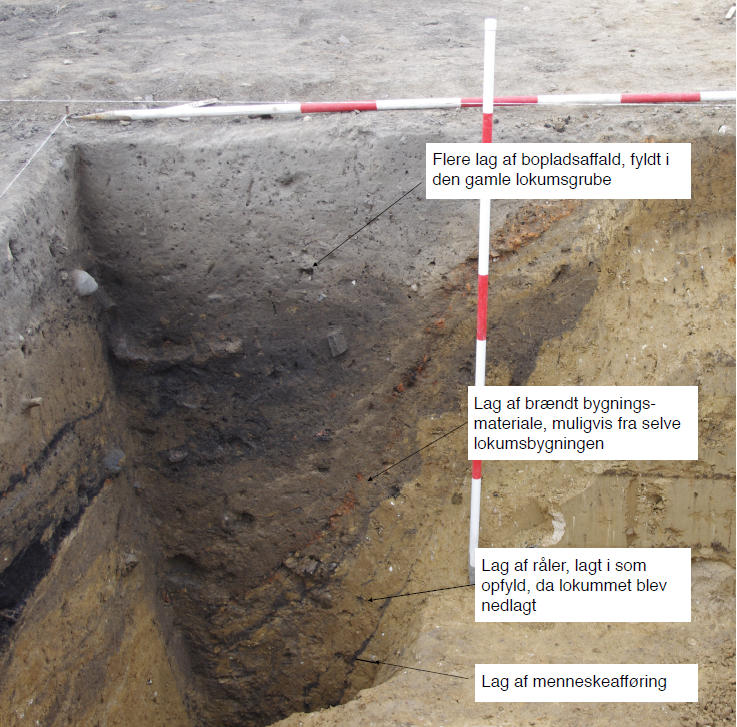
Museum of Southeastern Denmark archaeology researcher Anna Beck was digging up what she thought was a semi-subterranean workshop, only to find that she was knee-deep in… yeah, you guessed it. She’d found a layer of medieval poop.
Carbon dating pegs the toilet at more than 1,000 years old, making it possibly the oldest crapper in Denmark.
After a chemical analysis of material from the pit, Beck was able to confirm that she had indeed found a hole full of feces. She and her colleagues determined the excrement was human when they discovered that it was full of flower pollen, commonly found in honey. “I don’t know whether Vikings sat and ate honey, or if it was mead, but the interpretation at least is that it’s pollen from honey, and that is rarely used for feeding animals,” Beck told Science Nordic‘s Charlotte Persson. Unless these Vikings were feeding their animals honey and mead, this excrement pretty much had to be from a human.
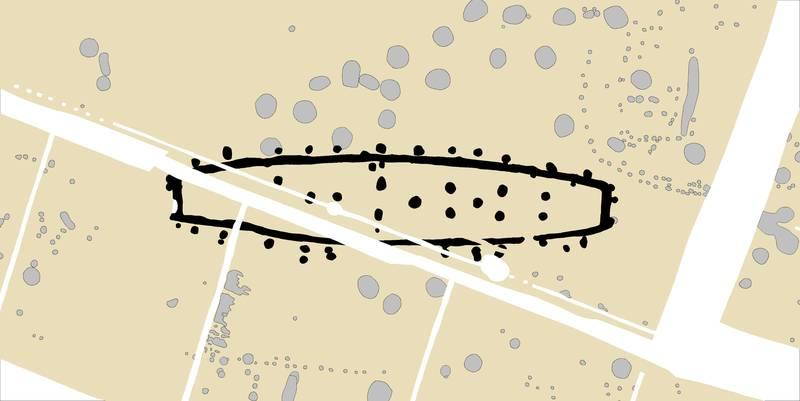
Further examination of the toilet revealed two post holes flanking the pit, which Beck says could have been part of an outhouse-like construction. This interpretation is bolstered by the fact that there was little airborne pollen in other layers of the pit, suggesting it was sheltered by walls.
Toilets were common in Viking cities, where archaeologists can often identify outhouse discoveries by smell alone. But in the country, people typically did their business in the barn with their animals. All manure was valuable as fertilizer, regardless of whether it came from cows or humans. That’s why Beck’s discovery has been greeted with skepticism by researchers like Museum Nordsjælland Director Kjartan Langsted. He argues that toilets were unheard of in the Danish countryside until the 18th century.

 Loading comments...
