Coming up
Economic sciences – Monday, 12 October, 11:45 CEST at the earliest
Physiology or medicine – announced 5 October
Physics – announced 6 October
Chemistry – announced 7 October
Literature – announced 8 October
Peace – announced 9 October
Coming up
Economic sciences – Monday, 12 October, 11:45 CEST at the earliest
Physiology or medicine – announced 5 October
Physics – announced 6 October
Chemistry – announced 7 October
Literature – announced 8 October
Peace – announced 9 October
57
prizes in economic sciences have been awarded since 1969
See all prizes and laureates46
years old: the youngest economic sciences laureate
Read about 2019 laureate Esther Duflo90
years old: the oldest economic sciences laureate
Read about 2007 laureate Leonid Hurwicz

Can you match the right research field to the right laureate? Have a try!

At a time of existential challenges – including more wars and conflicts than the world has seen in a long time – international law is no longer just a supplement to peace and security. It is an absolute necessity.
In historic international court cases, Navi Pillay has shown that legal measures can help prevent acts of war and violence. She has also contributed to strengthen the institutions of international law. Her independence, expertise and steadfastness have made her one of the most respected international jurists of our time.

Ill. Niklas Elmehed © Nobel Prize Outreach
The Norwegian Nobel Committee members were unable to reach new laureate Navi Pillay before they announced the award. Kristian Berg Harpviken, director of the Norwegian Nobel Institute, was later able to share the news with her.

© Nobel Prize Outreach. Photo: Jo Straube
In this call soon after the announcement, Pillay says she feels overwhelmed about being a Nobel Peace Prize laureate. “I know it’s a personal award, but for me, it’s for all the institutions I served on as well, all the people I worked for.”

Ill. Niklas Elmehed © Nobel Prize Outreach
Jørgen Watne Frydnes, chair of the Norwegian Nobel Committee, interviewed about the 2026 Nobel Peace Prize.

© Nobel Prize Outreach
The Nobel Prize in Literature 2026 has been awarded to the Canadian author Anne Carson “for her bold and inventive oeuvre that, in playful dialogue with the classical tradition, has created new forms for contemporary literature.”
Anne Carson has, throughout her entire career, combined poetry writing with translation work and teaching at various universities. Almost all her literary production has centred upon the intersection between the philologist’s obsession with words and the poet’s desire for new meaning. She has herself identified the etymology of words as the starting point for all her work.

Ill. Niklas Elmehed © Nobel Prize Outreach
First reactions
In this conversation just moments after the announcement, Anne Carson reveals that she has already started planning how to give away the prize money, and offers a tip for anyone curious about her work: “Find the middle and start there.”

Interview with the prize-awarder
Watch the interview with Steve Sem-Sandberg, member of the Nobel Committee at the Swedish Academy.

Some molecules, such as amino acids, exist as two variants that are each other’s mirror image. However, living organisms only contain one of these mirror images. How chemical asymmetry such as this could have emerged was long a mystery to chemists. Henri B. Kagan and Kenso Soai have been awarded the Nobel Prize in Chemistry 2026 for discovering a solution to this puzzle.
Press release
Popular information: They solved chemistry’s asymmetric mystery
Scientific background: Non-linear effects and auto catalysis in asymmetric organic catalysis
Prize announcement

© Johan Jarnestad/The Royal Swedish Academy of Sciences
First reactions
In this brief conversation, recorded shortly after the announcement of his Nobel Prize in Chemistry, Kenso Soai speaks of how happy he is to have his group’s work recognised.

Ill. Niklas Elmehed © Nobel Prize Outreach
Interview with the prize-awarder
Peter Somfai, member of the Nobel Committee for Chemistry, was interviewed by freelance journalist Sharon Jåma on the 2026 Nobel Prize in Chemistry.

Visual aid used by the prize-awarders when presenting the 2026 chemistry prize during the press conference.
Photo: Peter Frick © Nobel Prize Outreach
Francis Halzen realised that ice at the South Pole could be used to track particles known as neutrinos. His vision and scientific leadership have been fundamental for the IceCube Neutrino Observatory – a cubic kilometre of ice that is equipped with light sensors. Using IceCube, researchers can capture neutrinos from extremely energy-rich processes in the distant universe.
Press release
Popular information: Ice at the South Pole reveals cosmic particle accelerators
Scientific background
Prize announcement

© Johan Jarnestad/The Royal Swedish Academy of Sciences
First reactions
Francis Halzen speaks about the hurdles that he and his team had to overcome in the process of creating the neutrino detector on the South Pole – and how one of the crucial discoveries was “totally unexpected.”

Ill. Niklas Elmehed © Nobel Prize Outreach
Interview with the prize-awarder
Immediately after the announcement, Mark Pearce, Chair of the Nobel Committee for Physics was interviewed by freelance journalist Sharon Jåma regarding the 2026 Nobel Prize in Physics.

Visual aid used by the prize-awarders when presenting the 2026 physics prize during the press conference.
Photographer: Peter Frick
To understand how the brain forms memories, feelings and behaviours has long been a dream for researchers. Karl Deisseroth, Peter Hegemann and Georg Nagel have been awarded the 2026 Nobel Prize in Physiology or Medicine for discoveries leading to optogenetics, which makes it possible to switch on, or off, the activity of individual nerve cells in a living brain. This method is now being used in laboratories around the world to reveal the brain’s mysteries.
Press release
Popular information: A light-sensitive algal protein energised neuroscience
Scientific background: Optogenetics. Discovery of a neuronal switch
Prize announcement

© The Nobel Committee for Physiology or Medicine. Ill. Mattias Karlén
Karl Deisseroth was working on a paper late into the night when the call came from Stockholm.

Ill. Niklas Elmehed © Nobel Prize Outreach
Listen to Peter Hegemann speak about the pleasure of sharing the award with friends.

Ill. Niklas Elmehed © Nobel Prize Outreach
Georg Nagel received the news in Italy on a sun-drenched terrace, overlooking olive trees.

Ill. Niklas Elmehed © Nobel Prize Outreach


The Nobel Prize quiz
How much do you know about the Nobel Prize? Test your knowledge in this quiz!

How many individuals can share the same prize?

Which invention is Alfred Nobel most known for?

When was the first Nobel Prize awarded?

Why are the Nobel Prize award ceremonies held on 10 December each year?

Who selects the Nobel Prize laureates each year?

All the Nobel Prizes are awarded in Stockholm except one. Which one?

Which family is the most successful when it comes to number of awarded Nobel Prizes?

One organisation has been awarded a Nobel Peace Prize three times. Which one?

British Prime Minister Winston Churchill was awarded a Nobel Prize in 1953. In what prize category?

What year was the first prize in economic sciences awarded?

1
Correct
1
Incorrect
100 %
Accuracy
The first design of the Nobel Center project is here – a public building in Stockholm, Sweden for science, literature and peace. It will be an international symbol of knowledge, focusing on the Nobel Prize laureates’ stories and groundbreaking achievements. Read more about the project.

View from the water along the quay. The Nobel Center consists of four interconnected volumes that relate to the buildings of Södermalm and the size and height of the buildings in Gamla stan, on the other side of the water. The choice to use a wooden frame and reclaimed bricks reduces the impact on the environment. Bricks have characterised the architecture of Stockholm for centuries. The red shade is found in Stockholm’s classic brick buildings, such as City Hall.
© Onirism/Nobel Prize Outreach


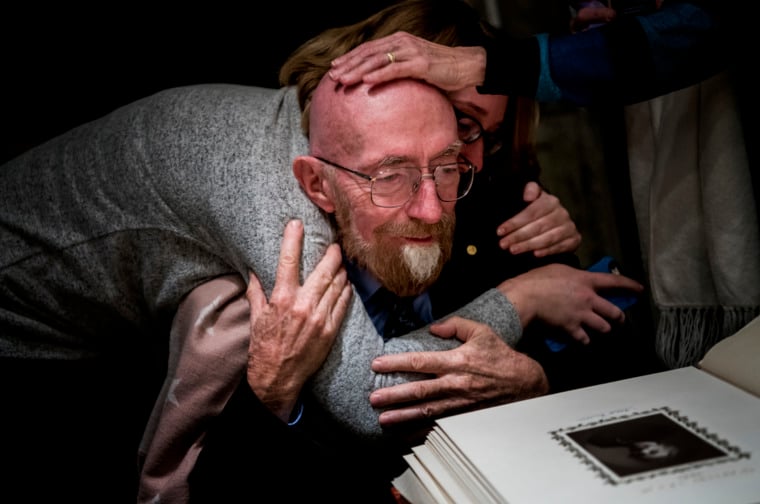
Ada Yonath died on 31 August 2026, aged 87. She was awarded the Nobel Prize in Chemistry 2009 “for studies of the structure and function of the ribosome.”
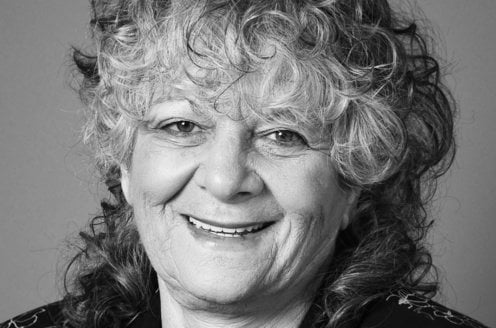
Hideki Shirakawa passed away on 24 August 2026 in Yokohama, Japan, aged 90. He was awarded the Nobel Prize in Chemistry 2000 “for the discovery and development of conductive polymers.”
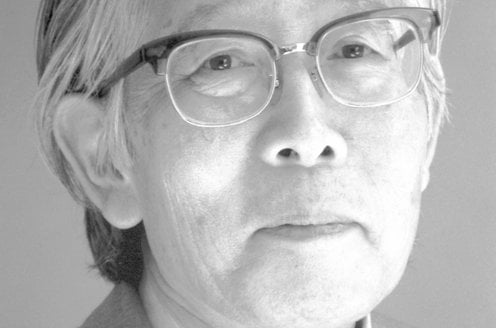
Rudolph Marcus passed away on 16 July 2026, aged 102. He was awarded the Nobel Prize in Chemistry 1992 “for his contributions to the theory of electron transfer reactions in chemical systems.”
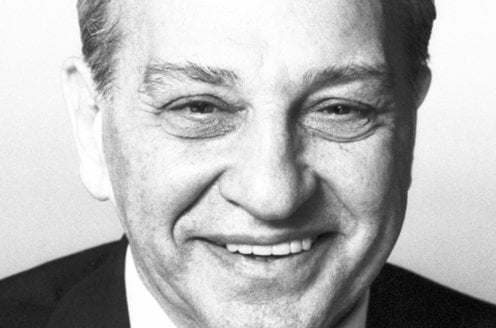
Susumu Tonegawa died on 11 July 2026, aged 86. He was awarded the Nobel Prize in Physiology or Medicine 1987 “for his discovery of the genetic principle for generation of antibody diversity.”