Wav2Lip: A Lip Sync Expert Is All You Need for Speech to Lip Generation In The Wild
 to 11.84 (Wav2Lip + GAN), improving the average user-preference from 2.35% (LipGAN) to 60.2% (Wav2Lip + GAN).
Review of Existing Literature
(I'll limit this section to the author's reasons for mentioning these papers, and leave out the in-depth information regarding specifically the approaches of these works)
The authors acknowledge several discrepancies between prior approaches and the requirements for an approach to work fully in the real world:
Requiring a large amount of training data for some methods.
Limitations in terms of the extent of vocabulary learned by the model.
Training on datasets with a limited set of vocabulary impedes upon the ability of prior approaches to learn the wide variety of phoneme-viseme mappings.
They continue to argue why prior approaches commonly fail to generate accurate lip-syncing when presented with unseen video content from the wild:
Pixel-level Reconstruction loss is a Weak Judge of Lip-sync: Loss functions incorporated in prior works inadequately penalize inaccurate lip-sync generation.
A Weak Lip-sync Discriminator: The discriminator in the LipGAN model architecture only has a 56% accuracy at detecting off-sync video-audio content, while the discriminator of Wav2Lip is 91% accurate at distinguishing in-sync content from off-sync content on the same test set.
A Lip-sync Expert Is All You Need
Finally, the authors propose their approach, taking into considering both of the above issues in prior works.
Use a pre-trained lip-sync discriminator that is already accurate in detecting out-of-sync video-audio content in raw, unconstrained samples.
Adapt the previously existing SyncNet model for this task. (I won't go into depth about this, rather, I'll only emphasize on the Wav2Lip architecture).
Overview of the Wav2Lip Model Architecture

Terminology
The authors use the following terms to refer to the various sections of their network, which I will continue to use following this section:
Random reference segment: A random sample of a segment of consecutive frames used to identify a particular speaker, providing the network context of the identity specific to the aforementioned speaker.
Identity encoder: Encodes the concatenation of the ground truth frames and a random reference segment, providing visual context for the network to adapt appropriately to any particular speaker.
Speech encoder: Encodes the audio data (self-explanatory).
Face decoder: Decoded the concatenated feature vectors into a series of reconstructed frames.
Methodology
At a high level, Wav2Lip inputs a Mel-spectrogram representation of a particular audio segment alongside a concatenation of the corresponding ground truth frames (with the bottom half masked) and a random reference segment whose speaker confirms to that of the ground truth segment. It reduces this input via convolutional layers to form a feature vector for both the audio and frames input. It then concatenates these feature representations, projecting the resulting matrix onto a segment of reconstructed frames through a series of transposed convolutional layers. There are residual skip connections between layers of the identity encoder and face decoder.
Wav2Lip attempts to fully reconstruct the ground truth frames from their masked copies. We compute L1 reconstruction loss between the reconstructed frames and the ground truth frames. Then, the reconstructed frames are fed through a pretrained "expert" lip-sync detector, while both the reconstructed frames and ground truth frames are fed through the Visual Quality Discriminator. The Visual Quality Discriminator attempts to distinguish between reconstructed frames and ground truth frames to promote the visual generation quality of the frame generator.
Loss Functions
The Generator
The generator aims to minimize the L1 loss between the reconstructed frames $L_g$ and the ground truth frames $L_G$:

where 𝑵 is the generally-accepted notation to denote batch size.
The Lip-Sync Discriminator
For lip-syncing, they implement cosine similarity with binary cross-entropy loss, thus computing the probability that a given two frames. More specifically, loss is computed between the ReLU-activated video and speech embeddings 𝑣 and 𝑠. This results in a list of probabilities, one for each sample, indicating the probability that the corresponding sample is in sync.

where the ReLU activation applied may be described as:
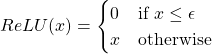
The full expert discriminator loss is computed by taking the cross-entropy of the distribution $P_{sync}$ as follows:

The Visual-Quality Discriminator
The Visual-Quality Discriminator is trained to maximize the following loss:

where the generator loss $L_{gen}$ is formulated as follows:

Accordingly, the generator attempts to minimize the weighted sum of the reconstruction loss, the synchronization loss, and the adversarial loss (recall that we are dealing with two discriminators):

where $s_w$ is the a weighting value which indicates the penalty attributed to synchronization, and $s_g$ is the adversarial loss.
These two disjoint discriminators allow the network to achieve superior synchronization-accuracy and visual generation quality.
Conclusion and Further Reading
That's it for "A Lip Sync Expert Is All You Need for Speech to Lip Generation In The Wild". If you'd like to read more in-depth, or about the few things I didn't cover here:
The proposed metric/evaluation system
Benchmark comparisons between Wav2Lip and prior models
Detailed training procedure and hyperparameters used by the authors
Real-world evaluation of Wav2Lip
you can investigate further by reading the paper: https://arxiv.org/pdf/2008.10010v1.pdf
Model architecture image credit to the authors of "A Lip Sync Expert Is All You Need for Speech to Lip Generation In The Wild".


